HR CRM redesign : 
“I can finally see it in one place” - YNO Designs
Skip to successes (case studies)
Go back Go back

HR CRM redesign : 
“I can finally see it in one place”

We replaced a fragmented HR ecosystem with a unified, data-driven platform that saves managers 9 minutes per case and finally puts all employee insights in one place.

Key Outcomes

90% reduced time

90% reduced time

Reduced case diagnosis time from
10 min to just 1

1 source of truth

1 source of truth

All relevant information visible at a glance

100% visibility

100% visibility

into employee performance

Client Context

About Morgan Stanley

Morgan Stanley is a global financial powerhouse, managing over $7.9 trillion in client assets across 42 countries with more than 80,000 employees. For a firm of this scale, speed, accuracy, and absolute regulatory compliance are essential.

Key Challenges

Data scavenger hunt

Data scavenger hunt

Managers were spending time "system-hopping" between spreadsheets and legacy tools to find basic answers.

Skepticism barrier

Skepticism barrier

Managers were spending time "system-hopping" between spreadsheets and legacy tools to find basic answers.

Design-to-development friction

Design-to-development friction

Managers were spending time "system-hopping" between spreadsheets and legacy tools to find basic answers.

Internal product adoption

Internal product adoption

Managers were spending time "system-hopping" between spreadsheets and legacy tools to find basic answers.

Solution

A Unified Command Center for HR

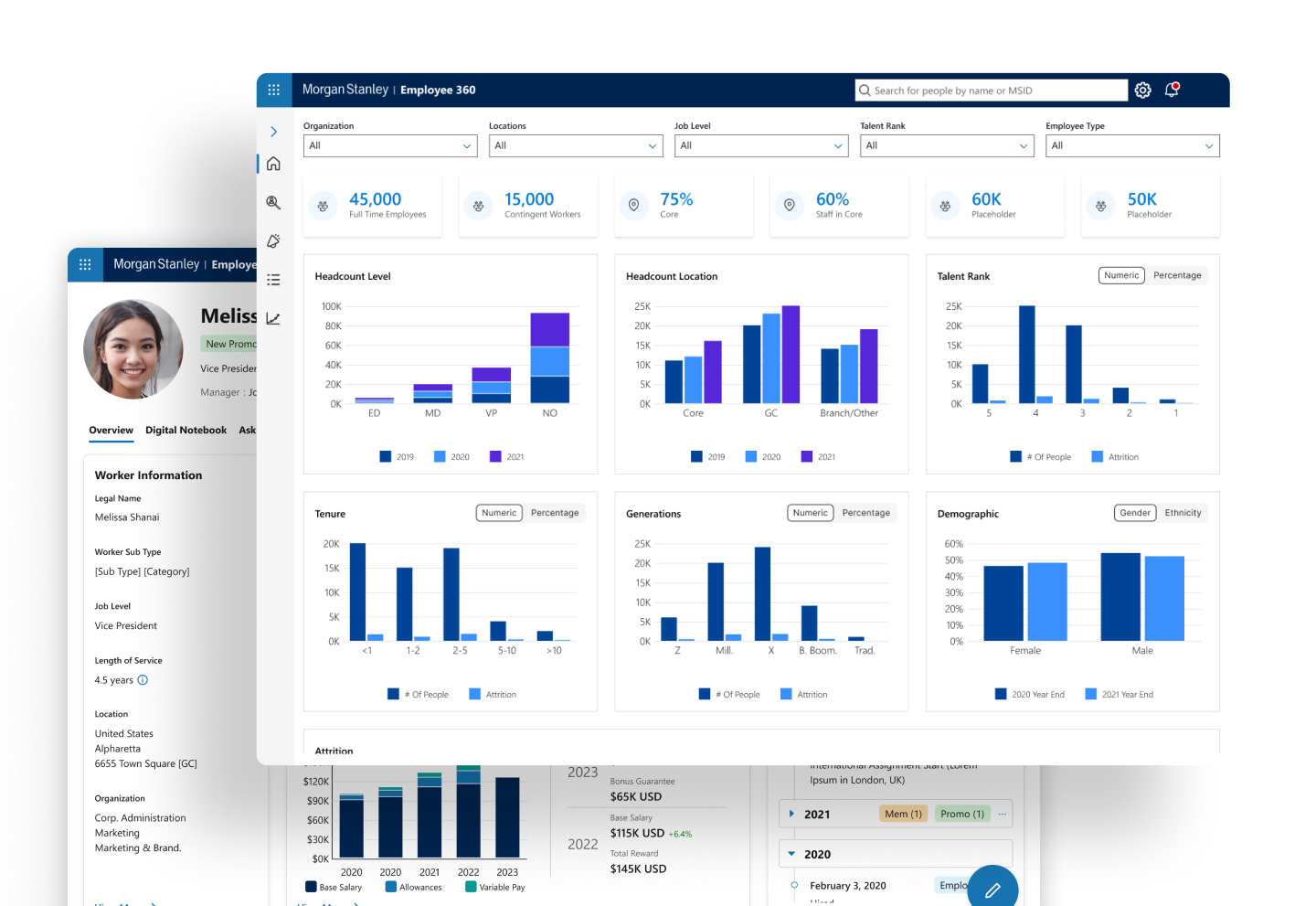
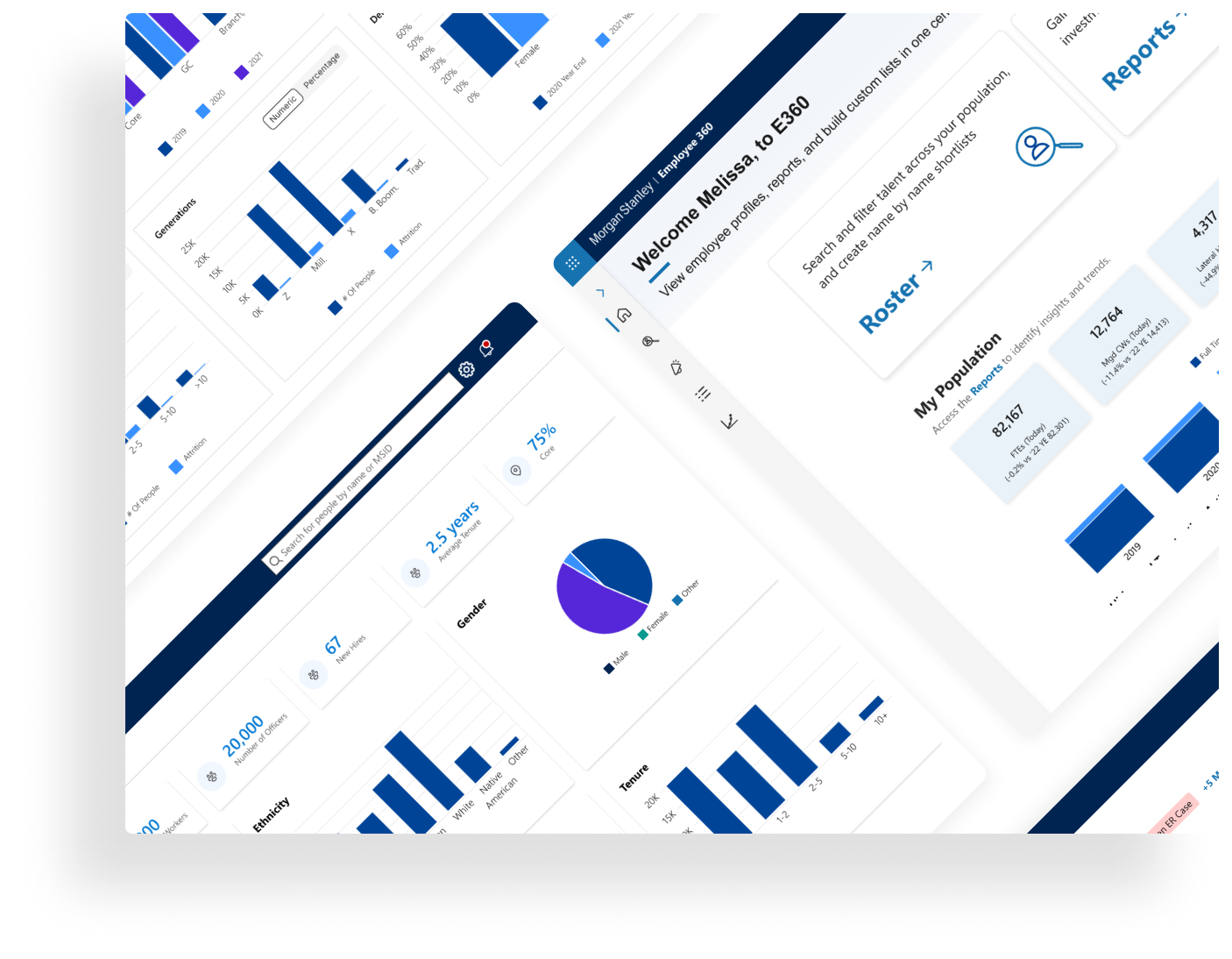
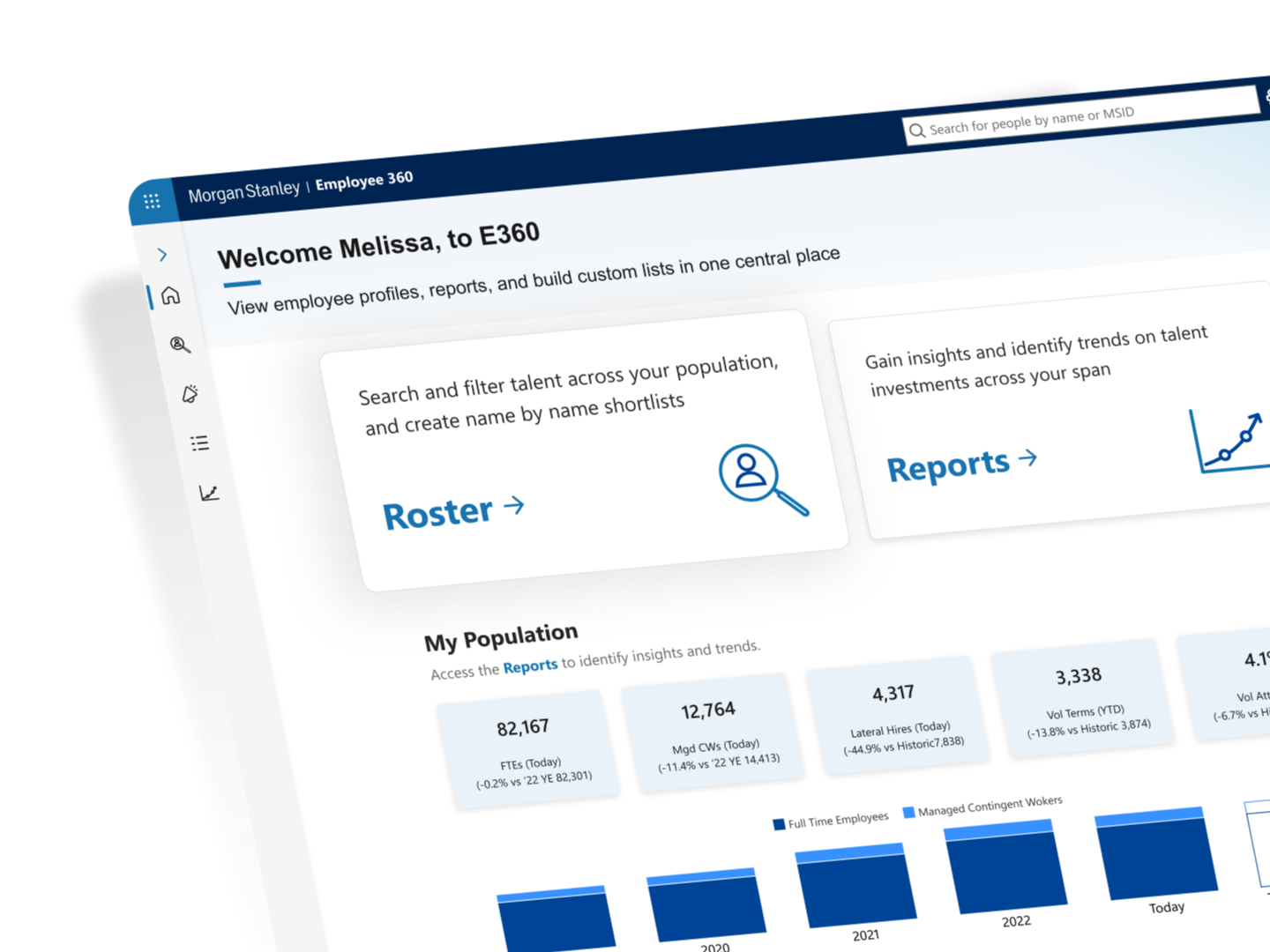
We created a modern, intuitive dashboard that brings all employee information, from performance metrics to compensation, into one clear view. By eliminating the need to click through multiple systems, managers got their time back and could now shift their focus from navigating software to actually supporting and nurturing their people.

Content Image
Process

Designing With People, Not Just For Them

To create a system people would actually value, we turned this project into a collaborative partnership. We moved from messy whiteboarding sessions to high-fidelity prototypes, constantly checking our work against real feedback. This ensured that the final MVP didn’t just look good, but solved the real-world frustrations HR managers faced every day.

Collaborative discovery

We started at the whiteboard with our users to map out their "must-have" data. This helped us look past the what and understand the why behind their daily needs.

The power of three

We presented three distinct layout concepts to see how users interacted with different data hierarchies. This inspired them to "pick and pull" the best elements from each version.

Refinement & system Building

Partnering with a Microsoft designer, we polished our best ideas into high-fidelity prototypes. We also built a design system to ensure every future update would be consistent and straightforward to code.

Post-launch evolution

We stayed close to our users after launch to identify hidden gems with the Compare Tool being one of them. We have already conceptualized MVP 2.0 and are looking to bring it to life.

Key Screens

The road ahead

Smarter, Faster, Better

Our team has moved into a "continuous improvement" phase, where we are using real-world usage data to guide our next big moves. Our goal is to shift the platform from a place where managers find information to a place where the system helps them anticipate needs.

On the horizon
  • Introducing AI insights
  • Expanding the Compare tool
  • Driving global adoption
Reflection

There is no innovation without trust

The greatest takeaway from this journey was that trust is the ultimate catalyst for innovation. By consistently delivering small wins and maintaining an open, 'messy' collaborative process, we transformed our relationship with the stakeholders from a service provider to a strategic partner. This shift proved that when you prioritize building a scalable design system and listen for 'hidden gem' features (like our Compare tool) you don't just solve a technical problem; you create a high-performance culture where user-centered design is the default, not the exception.